A Critical Overview for Patients and Families
When someone is told they have scoliosis, the first questions are usually simple: How bad is it? and What happens next? But when the diagnosis is levoscoliosis, those questions often come with a deeper layer of uncertainty—because this form of scoliosis is less common, less discussed, and sometimes evaluated more carefully by specialists.
Levoscoliosis describes a condition where the spine curves to the left, and while many cases are mild and manageable, the pattern of the curve often prompts doctors to ask more detailed questions about the spine, the nervous system, and long-term stability. For families, that additional attention can feel alarming if it isn’t explained clearly.
This guide exists to remove fear from the equation.
Below, you’ll find a comprehensive, patient-centered explanation of levoscoliosis—what it is, how it differs from other spine curves, why it’s treated thoughtfully, and when more advanced care, including surgery, may be considered. Whether you are a patient, a parent, or a caregiver, this page is designed to help you think clearly, ask better questions, and move forward with confidence.
What Is Levoscoliosis?
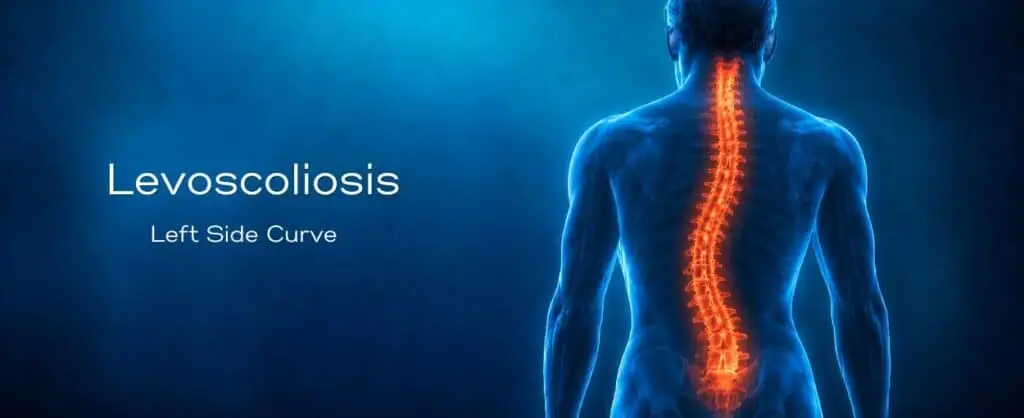
Levoscoliosis is a form of scoliosis in which the spine curves toward the left side of the body when viewed from behind. The curve may involve the thoracic region, the lumbar region, or span more than one segment of the spine. What defines levoscoliosis is not severity, but direction.
For patients, this distinction matters because the direction of a spinal curve influences posture, muscle balance, how the ribs rotate, and how specialists interpret imaging. While scoliosis is often discussed as a single condition, the reality is that different curve patterns behave differently over time.
Why This Matters:
Understanding what levoscoliosis actually means helps patients avoid unnecessary fear while also appreciating why careful evaluation of the spine is important from the very beginning.
Quick Review
What is levoscoliosis?
Levoscoliosis is a type of scoliosis in which the spine curves to the left when viewed from behind. It most commonly occurs in the lumbar (lower back) region. The condition is defined by the direction of the curve, not its severity. Left-sided thoracic curves are evaluated more carefully than right-sided curves because they are statistically less common, but levoscoliosis does not inherently carry a worse prognosis than other scoliosis types.
Why Levoscoliosis Is Less Common—and Why That Matters
Most idiopathic scoliosis cases—particularly thoracic curves—bend to the right. A left-sided thoracic curve is statistically less common, which is why levoscoliosis often receives closer clinical attention.
This does not mean levoscoliosis is inherently more dangerous. Instead, it means physicians are trained to ask why a left-curving pattern developed and whether anything else in the spine or nervous system needs to be ruled out. That additional scrutiny is intentional and protective.
In rare cases, certain underlying conditions can be associated with left-sided spine curves, which is why specialists may recommend more detailed imaging early in the evaluation process.
Where Levoscoliosis Most Commonly Occurs in the Spine:
While levoscoliosis can occur anywhere along the spine, it is more commonly found in the lumbar (lower back) region. Left-sided curves in the thoracic spine—often referred to as thoracic levoscoliosis—are less common, which is why they may prompt more careful evaluation by a spine specialist. This additional attention is not a sign of increased danger, but rather a way to ensure the spine, spinal cord, and surrounding structures are fully understood before treatment decisions are made.
Why This Matters:
Levoscoliosis stands out not because it signals a worse outcome, but because it deserves thoughtful, informed assessment of the spine as a whole.
Causes of Levoscoliosis
One of the most emotionally charged questions families ask is: What caused this? In most cases, levoscoliosis is not the result of injury, posture, or anything a parent or patient did wrong.
Common Causes Include:
- Idiopathic scoliosis, especially in adolescents
- Congenital spinal differences, where vertebrae formed asymmetrically before birth
- Neuromuscular conditions affecting muscle balance and spinal support
- Degenerative changes in the adult spine, including disc collapse and arthritis
While identifying a cause can help guide treatment, many patients with levoscoliosis never need a definitive explanation to achieve excellent long-term outcomes.
Why This Matters:
Understanding possible causes reassures families that levoscoliosis is usually a structural issue of the spine—not a failure of care or prevention.
Symptoms of Levoscoliosis
Symptoms of levoscoliosis vary widely, and that variability is one reason the condition can be confusing. Some patients notice visible changes, while others experience pain or fatigue without obvious asymmetry. Children often have fewer symptoms, while adults are more likely to feel discomfort related to spinal imbalance.
What matters most is not just what symptoms appear, but why they appear—because symptoms reflect how the spine is interacting with muscles, nerves, and daily movement.
Common Symptoms May Include:
- Uneven shoulders or shoulder blades
- A visible leftward lean of the torso
- Rib or flank prominence
- Uneven hips or waistline
Adults may also experience back pain, stiffness, or muscle fatigue as the spine compensates for the curve.
Why This Matters:
Symptoms don’t always correlate with curve size, which is why expert evaluation of the spine is essential rather than relying on appearance alone.
How Levoscoliosis Is Diagnosed
Diagnosis of levoscoliosis goes beyond confirming that a curve exists. The goal is to understand how the spine is structured, how the curve behaves, and whether additional investigation is warranted based on the curve pattern.
Specialists begin with a physical examination and follow with imaging that allows precise measurement of the curve and evaluation of spinal alignment.
Diagnostic Tools May Include:
-
Standing X-rays are used to measure the Cobb angle, which is the standard clinical measurement for quantifying a spinal curve. To calculate it, the radiologist identifies the most tilted vertebrae at the top and bottom of the curve and measures the angle formed between them. A Cobb angle below 10 degrees is considered normal variation. A measurement above 10 degrees confirms a scoliosis diagnosis. From there, the degree of the curve directly shapes treatment decisions:
- 10 to 24 degrees: mild, typically monitored with periodic X-rays
- 25 to 44 degrees: moderate, may require bracing in patients who are still growing
- 45 degrees and above: severe, surgical consultation is typically recommended
Understanding your Cobb angle number gives you a concrete way to track whether your curve is stable, improving, or progressing over time.
- MRI imaging if neurological symptoms or atypical patterns are present
- CT scans in complex or congenital cases
Each step exists for a reason: to remove uncertainty and build a clear picture of the spine.
Why This Matters:
Accurate diagnosis allows families to move forward with confidence rather than speculation.
Quick Answer
How is levoscoliosis measured?
Levoscoliosis is measured using the Cobb angle on a standing full-spine X-ray. The angle is formed between lines drawn along the most tilted vertebrae at the top and bottom of the curve. A Cobb angle above 10 degrees confirms scoliosis. Curves under 25 degrees are typically monitored. Curves of 25 to 45 degrees may require bracing in growing patients. Curves above 45 to 50 degrees are evaluated for surgical intervention.
Treatment Options for Levoscoliosis
Treatment for levoscoliosis is never one-size-fits-all. The approach depends on age, curve size, symptoms, and whether the spine is still growing.
Many patients are relieved to learn that most cases do not require invasive intervention. Conservative management is often highly effective.
Common Treatment Approaches:
- Observation for mild, stable curves
- Physical therapy focused on posture, strength, and balance
- Bracing for adolescents during growth
- Pain-focused care for adults with degenerative spine changes
The goal is not just curve management, but preservation of comfort, mobility, and quality of life.
Why This Matters:
Knowing that multiple treatment paths exist helps patients see levoscoliosis as manageable—not inevitable.
Levoscoliosis in Children vs. Adults
Age plays a major role in how levoscoliosis behaves and how the spine responds to treatment.
In children and adolescents, the primary concern is progression during growth. In adults, symptoms are more often related to spinal wear, imbalance, or nerve irritation.
Understanding these differences helps families set realistic expectations and choose appropriate care at the right time.
Why This Matters:
Treatment decisions for the spine must align with life stage—not just imaging results.
Potential Complications if Left Untreated
Not every case of levoscoliosis progresses, but some spine curves can worsen over time—especially during periods of growth or degeneration.
Potential complications may include:
- Increasing pain
- Postural imbalance
- Reduced lung capacity in thoracic levoscoliosis
- Nerve compression in advanced cases
Monitoring exists to prevent these outcomes rather than react to them.
Why This Matters:
Proactive spine care reduces the likelihood of preventable long-term complications.
Living With Levoscoliosis: Practical Daily Guidance
Daily habits influence how the spine feels and functions. Patients often underestimate how much impact small, consistent choices can have on comfort and confidence.
Helpful strategies include:
- Core strengthening to support spinal alignment
- Ergonomic seating and workspaces
- Balanced movement and activity
- Avoiding repetitive one-sided strain
These steps do not “fix” levoscoliosis, but they support the spine effectively.
Why This Matters:
Empowering patients with practical tools restores a sense of control over their condition.
When Surgery Is Considered for Levoscoliosis
Levoscoliosis surgery is typically considered only when clear criteria are met. These may include significant curve magnitude, documented progression, or symptoms that interfere with daily life or neurological function.
Surgical treatment focuses on stabilizing the spine, correcting alignment where appropriate, and protecting long-term function. Modern techniques prioritize safety, precision, and recovery.
Why This Matters:
Surgery is a thoughtful decision—not a last resort—and is most successful when timed appropriately.
Quick Answer
When is surgery recommended for levoscoliosis?
Surgery for levoscoliosis is typically considered when curves exceed 45 to 50 degrees in adolescents, particularly when bracing has not prevented progression. In adults, surgical decisions are driven more by functional limitation, pain severity, and neurological involvement than by curve angle alone. The primary surgical approach is spinal fusion, which stabilizes the spine and prevents further progression.
Choosing the Right Spine Specialist
Because levoscoliosis is less common, patients often benefit from evaluation by spine specialists who have experience assessing complex and atypical curve patterns and determining the most appropriate course of care based on individual findings. Left-curving spine conditions may warrant careful interpretation of imaging and symptoms to ensure recommendations are well-informed and appropriately tailored. Right side curve is called Dextroscoliosis and more information can be learned in our blog on this topic here.
A qualified spine specialist focuses not only on identifying the presence of a curve, but on explaining how the spine is functioning, what the findings may indicate, and what options are available. Clear communication helps patients and families understand both the condition and the reasoning behind any recommended next steps, whether those involve continued monitoring, non-surgical management, or consideration of surgery.
One such specialist is Dr. Steven Cyr, a board-certified orthopedic spine surgeon and founder of S.A. Spine. Dr. Cyr has extensive experience evaluating and treating scoliosis, including patients with less common curve patterns such as levoscoliosis. His clinical practice includes both non-surgical management and surgical treatment when appropriate, with decisions guided by careful assessment, patient symptoms, and established clinical criteria.
Patients often note Dr. Cyr’s emphasis on education and shared decision-making. His approach prioritizes helping individuals understand their diagnosis, the range of available options, and the potential risks and benefits involved, so they can make informed choices about their spine care.
Dr. Cyr sees levoscoliosis patients at SA Spine’s offices in San Antonio and Houston, Texas. Whether you are looking for a levoscoliosis specialist in San Antonio or seeking evaluation in the Houston area, his team offers appointments at both locations.
Why This Matters
Decisions involving the spine can have long-term implications. Working with a specialist who combines experience, clear communication, and a patient-centered approach supports informed, thoughtful decision-making and realistic expectations.
Key Takeaways for Patients and Families
Levoscoliosis is a specific scoliosis type defined by left-curving spine alignment. While it is less common, it is often manageable with proper evaluation and care. Most patients never require surgery, and those who do benefit from thoughtful, expert planning.
Why Patients Trust Dr. Cyr
- Board-certified orthopedic spine surgeon
- Extensive experience evaluating and treating scoliosis
- Familiar with complex and less common curve patterns, including levoscoliosis
- Emphasizes patient education and clear communication
Why This Matters:
Education transforms uncertainty into informed action. Experience by the right surgeon can be life-changing. Dr. Cyr he’s an expert at all types of scoliosis surgery. if you would like to make an appointment at SASpine to explore your surgical and non-surgical options.
SA Spine has offices in San Antonio and Houston, Texas. To schedule an evaluation with Dr. Cyr for levoscoliosis or any scoliosis condition, request an appointment here.
FAQs About Levoscoliosis
What is levoscoliosis?
+Is levoscoliosis more serious than other scoliosis types?
+Does levoscoliosis always require surgery?
+Can levoscoliosis worsen over time?
+When should I see a spine specialist?
+What does a levoscoliosis diagnosis mean for my child?
+Resources:
Cleveland Clinic
Medically Reviewed by Dr. Steven Cyr